

As we approach 2027, now is the perfect time to take stock of your finances. With changes to Inheritance Tax, pensions, savings and rental income on the horizon, reviewing your financial plans before the new tax year could make a real difference to your financial future.
- What’s changing in 2027?-
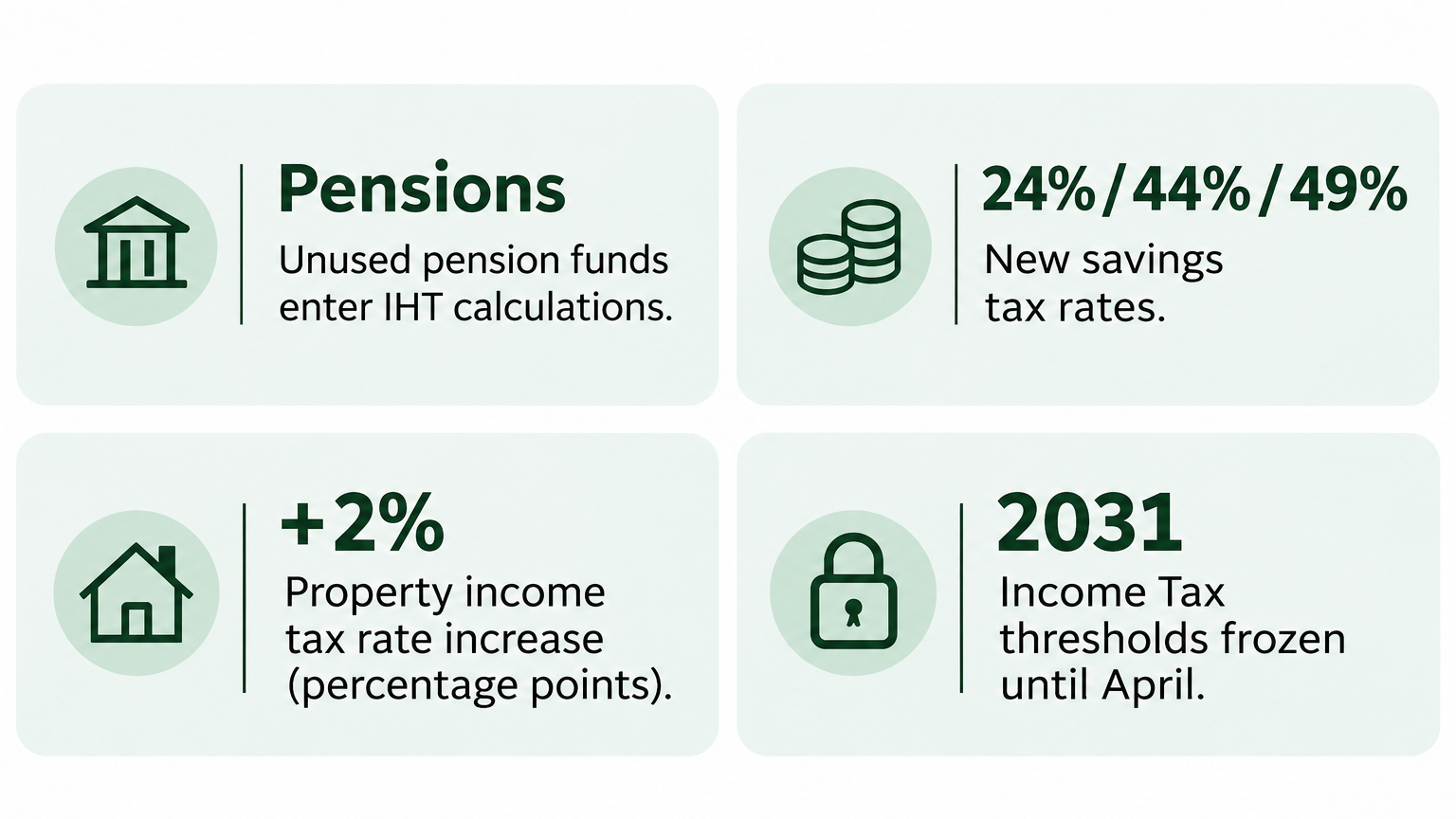
The October 2026 Budget has brought further changes to the UK tax landscape, while previously announced reforms are also due to take effect from April 2027.
Whether you're approaching retirement, building your savings, managing a property portfolio or thinking about passing wealth to the next generation, understanding what's changing is an important first step.
Here are some of the key developments to be aware of and, more importantly, what you can do to prepare.
1. Pensions and Inheritance Tax: A Significant Change from April 2027
One of the most important changes coming into force on 6 April 2027 concerns how pensions are treated for Inheritance Tax (IHT) purposes.
Historically, many pension funds have been held outside an individual's estate for IHT purposes, making pensions a valuable part of intergenerational wealth planning.
However, from April 2027, most unused pension funds and pension death benefits will be included in the value of a person's estate when calculating any Inheritance Tax liability.
This could have significant implications for families who have built up substantial pension savings.
What does this mean in practice?
The standard Inheritance Tax nil-rate band remains at £325,000, with an additional residence nil-rate band of up to £175,000 potentially available when a qualifying home is passed to direct descendants.
For married couples and civil partners, transferable allowances can mean that up to £1 million may be passed on free of IHT in qualifying circumstances.
However, including unused pensions within the estate could push more families above the relevant thresholds.
Consider the scenario below:
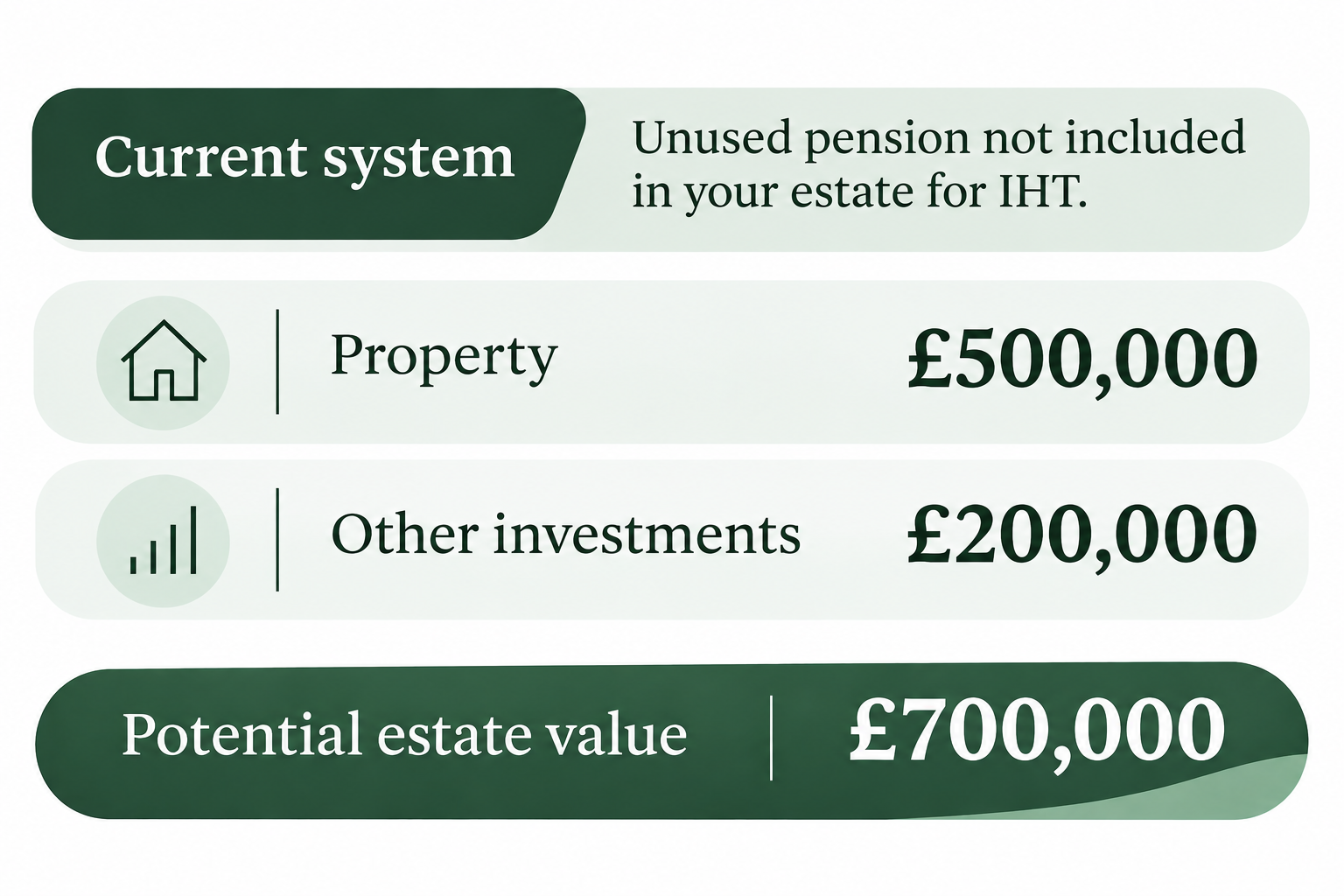
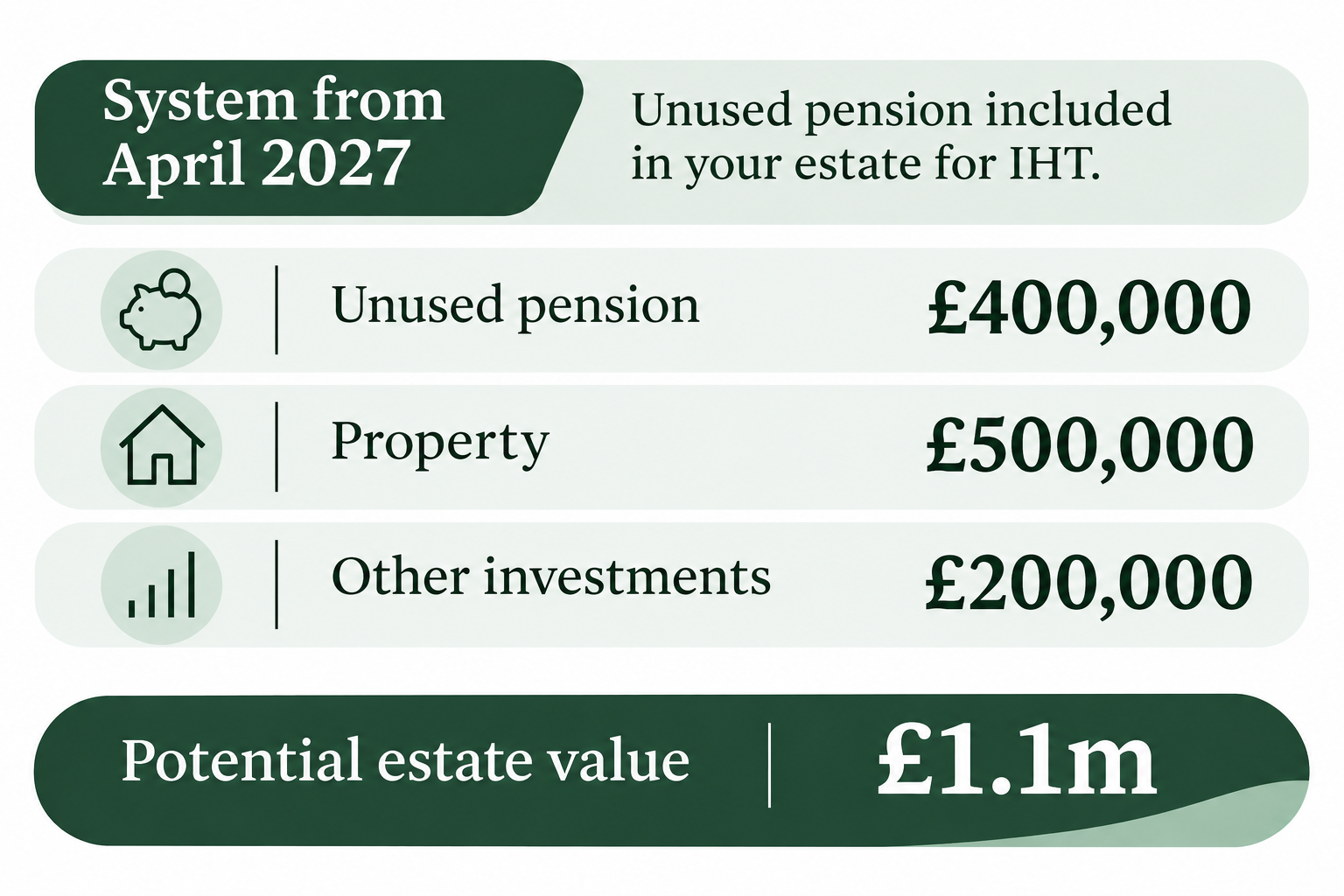
In this example, someone with a property worth £500,000, other investments worth £200,000 and an unused pension fund of £400,000 could have an estate valued at £1.1 million for IHT purposes, when previously it would have been valued at £700,000.
Depending on their circumstances, exemptions and available allowances, this could result in a larger Inheritance Tax bill than under the previous rules.
Importantly, this doesn't mean every inherited pension will automatically face a 40% tax charge. Spousal exemptions and other reliefs may still apply, and the eventual tax position will depend on the estate and beneficiaries.
What should you do?
Now is a sensible time to review your retirement and estate planning arrangements.
Consider whether your current pension withdrawal strategy remains appropriate, whether your beneficiaries are up to date and how your pension fits into your wider estate.
For some people, drawing more from their pension during retirement or making gifts during their lifetime may be worth exploring. However, these decisions need careful consideration, particularly as pension withdrawals can trigger Income Tax and gifts have their own IHT rules.
The key is to make sure your pension continues to support both your retirement needs and your wishes for your family.
2. Savings Tax Is Increasing: Are You Making the Most of Your Allowances?
The 2026 Budget confirmed increases in the tax rates applied to savings income from 6 April 2027.
The new rates will be:
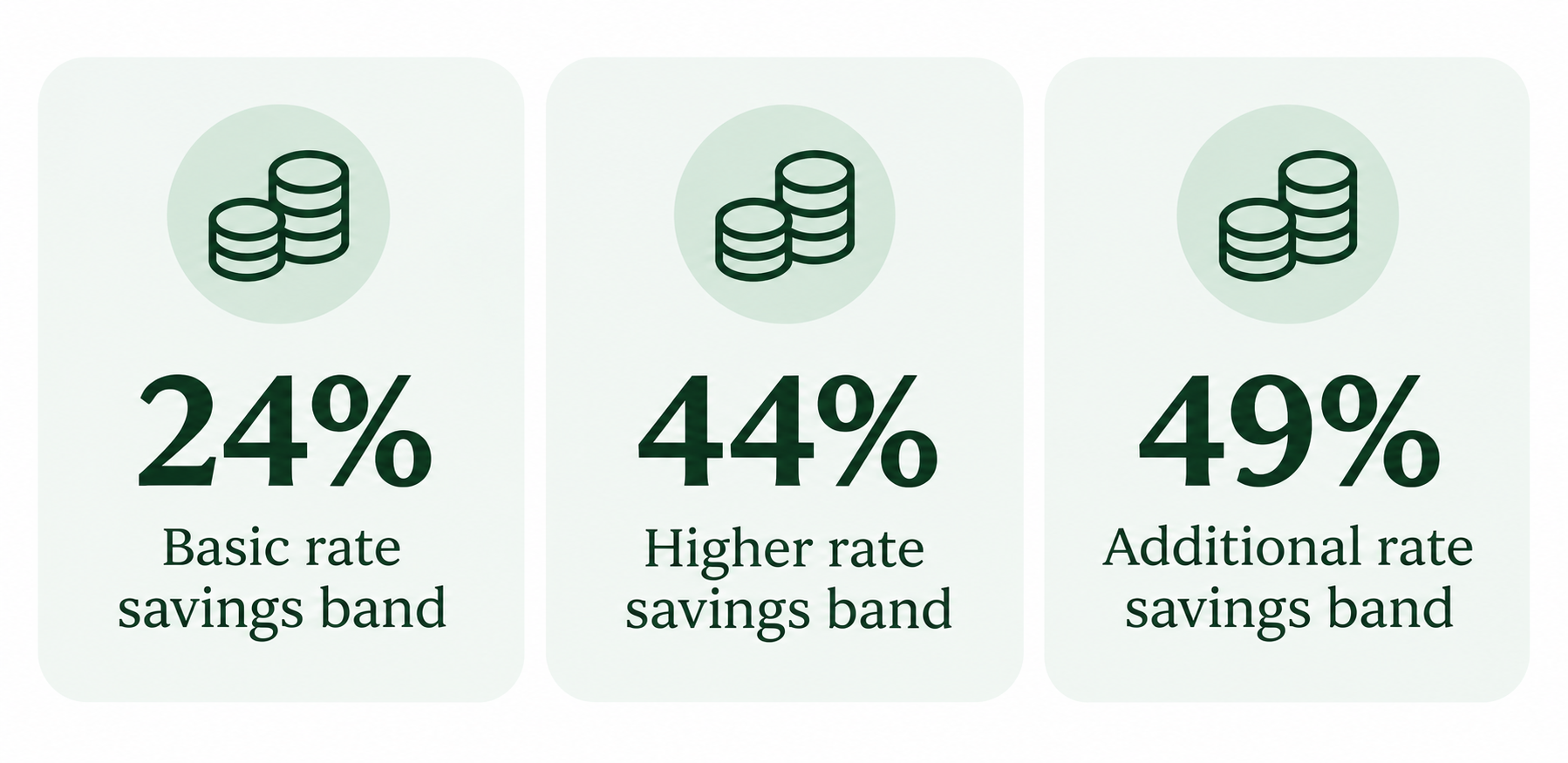
Basic rate: 24%, up from 20%
Higher rate: 44%, up from 40%
Additional rate: 49%, up from 45%
These changes apply to taxable savings income across the UK.
For people holding significant cash savings outside tax-efficient accounts, the higher rates could mean paying more tax on interest earned.
The good news is that the Personal Savings Allowance continues to provide some protection. Under the current rules, basic-rate taxpayers can generally earn up to £1,000 in savings interest tax-free each year, while higher-rate taxpayers can earn up to £500. Additional-rate taxpayers do not receive this allowance.
Don't overlook your ISA allowance
The 2026 Budget also confirmed that the overall annual ISA allowance will remain at £20,000.
Importantly, the government has retained the £20,000 annual cash ISA limit, rather than proceeding with the previously announced reduction to £12,000 for those under 65.
This makes ISAs an important consideration for anyone looking to protect their savings and investments from future UK Income Tax and Capital Gains Tax.
Interest earned within a cash ISA remains free from UK Income Tax, while investments held within a stocks and shares ISA benefit from tax-efficient treatment.
What should you do?
Review where your savings are currently held and whether you're making full use of your available allowances.
If you have substantial cash balances in ordinary savings accounts, it may be worth considering whether an ISA could improve your tax efficiency.
You should also think about how much money you need readily available and whether longer-term investments might be appropriate for your financial objectives.
Remember, investing involves risk and the value of investments can fall as well as rise.
3. Landlords Face Higher Tax Rates from April 2027
Property investors and landlords are another group who will need to pay close attention to the upcoming changes.
From 6 April 2027, new Income Tax rates will apply to property income in England, Wales and Northern Ireland:
Basic rate: 24%
Higher rate: 44%
Additional rate: 49%
These rates represent an increase of two percentage points compared with the previously applicable rates.
For landlords who own rental properties personally, this could reduce the amount of income retained after tax.
As a simple illustration, a landlord with £15,000 of taxable rental profit falling entirely within the higher property tax band could see the tax attributable to that income increase by approximately £600 a year, before considering any other changes in their circumstances.
For landlords with several properties, the overall impact could be more substantial.
Is it time to review your property investments?
Rental property can still play a role in a diversified financial plan, but it's important to understand the true return after tax, mortgage costs, maintenance, insurance and other expenses.
Landlords should consider reviewing their rental profitability, allowable expenses and the longer-term role of property within their overall investment strategy.
Some may wish to explore whether alternative ownership structures are appropriate, although transferring properties into a limited company can create additional tax costs and should never be viewed as an automatic solution.
A review with a qualified tax adviser could help identify whether any changes are worthwhile.
4. Frozen Tax Thresholds: Why You Could Pay More Without a Tax Rate Increase
Another important issue is the continued freezing of personal tax thresholds.
The Personal Allowance remains at £12,570, while the higher-rate Income Tax threshold for England, Wales and Northern Ireland remains at £50,270 for most taxpayers entitled to the full allowance.
These thresholds are set to remain frozen until April 2031.
Although the main rates of Income Tax on employment income are not increasing, frozen thresholds can still lead to higher tax bills over time.
This is commonly referred to as fiscal drag, as illustrated below.
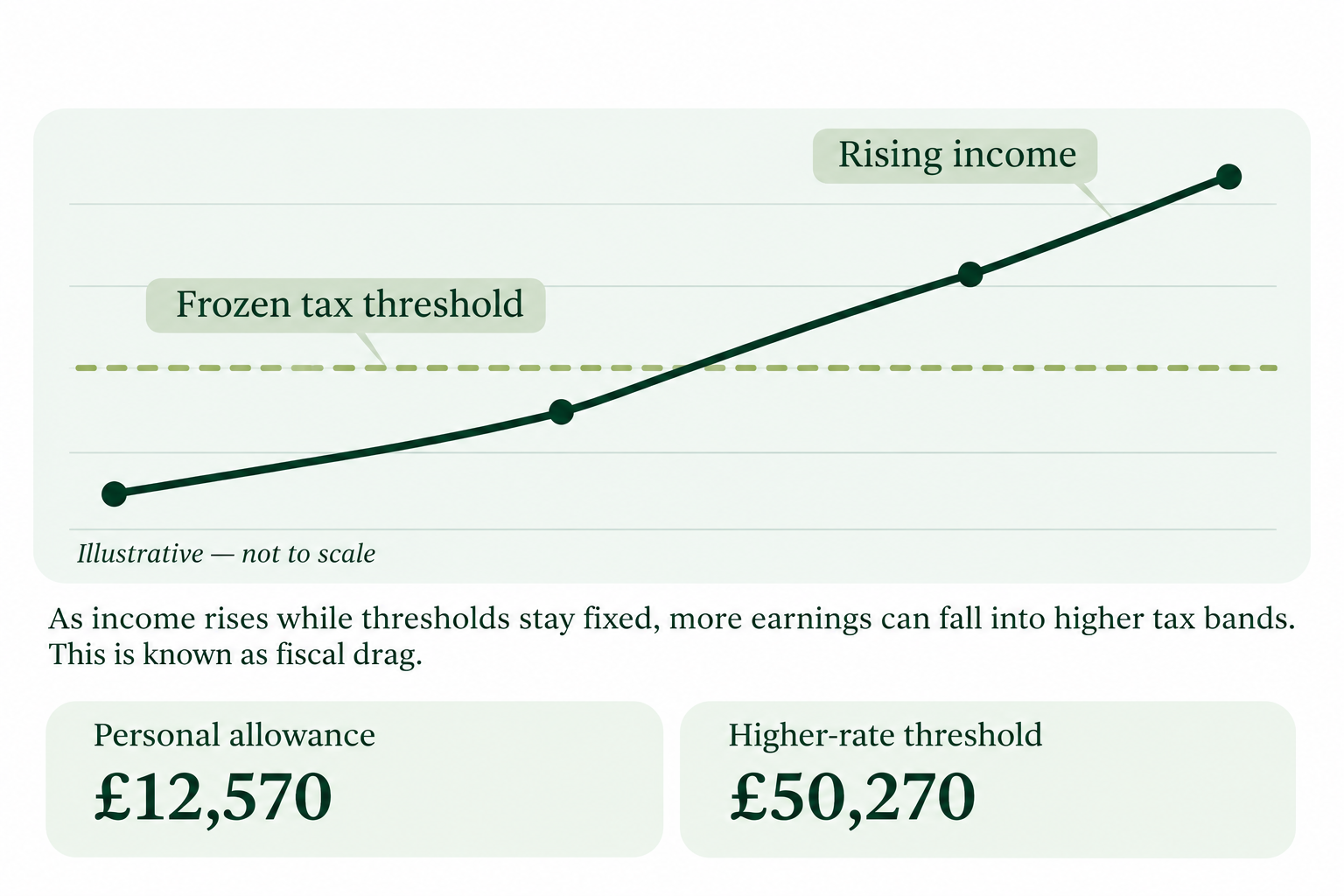
As wages, pensions and other income rise, more of your earnings may become taxable or fall into a higher tax band.
For someone receiving regular pay increases, this could mean that their take-home pay doesn't rise as much as expected.
What should you do?
Review your overall taxable income and consider whether you're using the allowances and reliefs available to you.
Pension contributions can be particularly valuable for some taxpayers, as they may reduce adjusted net income while helping to build retirement savings.
For couples, it may also be worth reviewing the way savings and investments are held, taking account of individual tax positions and allowances.
Small adjustments today can sometimes make a meaningful difference over the longer term.
5. Review Your Retirement Plans, Not Just Your Pension Pot
The changes to pension inheritance rules make 2027 an important year to reassess retirement planning more broadly.
It's easy to focus on how much you've accumulated in your pension, but equally important is understanding how that money will support your lifestyle once you stop working.
Questions worth considering include:
How much income will you need in retirement?
When do you plan to access your pensions?
Are you making the most of tax-efficient pension contributions?
Do you have other savings or investments you could draw on?
How will your pension and other assets eventually pass to your loved ones?
The standard pension Annual Allowance remains £60,000 for 2027/28, although lower limits can apply depending on earnings, income levels and whether you have already flexibly accessed pension benefits.
Retirement planning shouldn't be viewed in isolation from estate planning. The two are becoming increasingly connected, and a joined-up approach could help you make better-informed decisions.
6. Make Sure Your Estate Planning Is Up to Date
With pensions becoming part of the IHT calculation from April 2027, estate planning deserves particular attention.
Many people assume that Inheritance Tax is only a concern for the very wealthy. However, rising property values, accumulated investments and pension savings can mean that more families need to consider their potential exposure.
Having an up-to-date will is an important starting point, but estate planning goes beyond deciding who receives your assets.
It can also involve considering lifetime gifts, available exemptions, trusts where appropriate and the financial needs of your beneficiaries.
For example, the annual IHT gifting exemption generally allows individuals to give away £3,000 each tax year, with the possibility of carrying forward unused exemption from the previous tax year.
There are also rules that may allow qualifying regular gifts made from surplus income to fall outside an estate for IHT purposes.
These exemptions can be useful, but the rules are detailed and proper records are important.
The aim should be to create a plan that protects your own financial security while allowing you to pass on wealth in line with your wishes.
7. Your Financial Checklist Before April 2027
With the new tax year approaching, there are several practical steps worth considering.
Review your pensions. Understand the value of your pension savings, check your beneficiaries and consider whether the upcoming IHT changes affect your retirement or estate plans.
Make use of your ISA allowance. Check how much of your £20,000 annual allowance remains available before the current tax year ends on 5 April 2027.
Assess your savings interest. Consider whether rising savings tax rates could affect you and whether your cash is held as tax-efficiently as possible.
Review rental property income. If you're a landlord, calculate the potential effect of the higher property income tax rates on your net returns.
Check your tax position. Frozen thresholds mean it's worth reviewing your income, pension contributions and available allowances.
Update your estate planning. Ensure your will, pension nominations and wider arrangements reflect your current circumstances.
Seek professional advice where needed. Tax and pension decisions can have long-term consequences, particularly where retirement income and inheritance planning overlap.
Looking Ahead: A Little Planning Now Could Make a Big Difference
The changes taking effect in 2027 are a reminder that financial planning isn't something to review once and then forget about.
Tax rules evolve, personal circumstances change and the decisions that were appropriate a few years ago may not be the most suitable today.
Whether you're saving for the future, preparing for retirement, managing investments or planning to pass wealth to your family, taking time to review your finances now could help you approach 2027 with greater confidence.
The most important thing is to be proactive rather than reactive.
By understanding the changes and considering how they affect your personal circumstances, you can make informed decisions that support your financial goals, both now and in the years ahead.
Ready to Get Your Finances in Shape for 2027?
With significant changes to pensions, Inheritance Tax, savings and property income approaching, now is an ideal time to review your financial arrangements.
Speaking to a financial adviser can help you understand how these changes may affect you and identify opportunities to make your finances more tax-efficient.
Get in touch with our team to arrange a financial review and start planning for 2027 with confidence.
Important information: This article is for general information only and does not constitute personal financial or tax advice. Tax treatment depends on individual circumstances and may change. Pension and investment values can fall as well as rise. Some Budget 2026 measures remain subject to the legislative process. Information is based on announcements and legislation available as at November 2026.